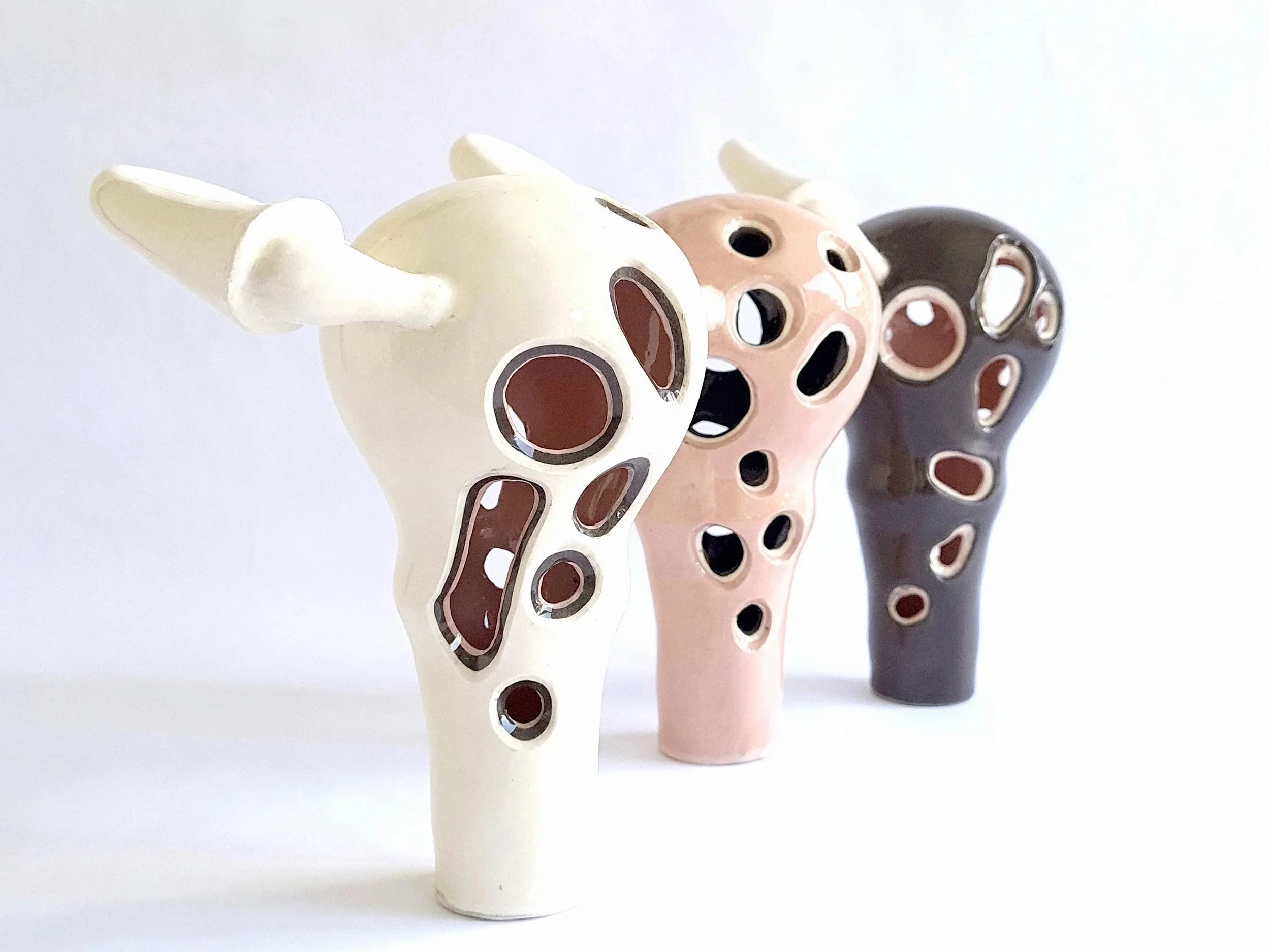
More than a biological form, the uterus becomes a vessel for stories of power, vulnerability, and resilience. From reproductive rights to violence and the complexities of motherhood, the capacity to create life often shapes the most difficult decisions a woman may face.
2022
Earthenware and Porcelain
7×4×9 in.
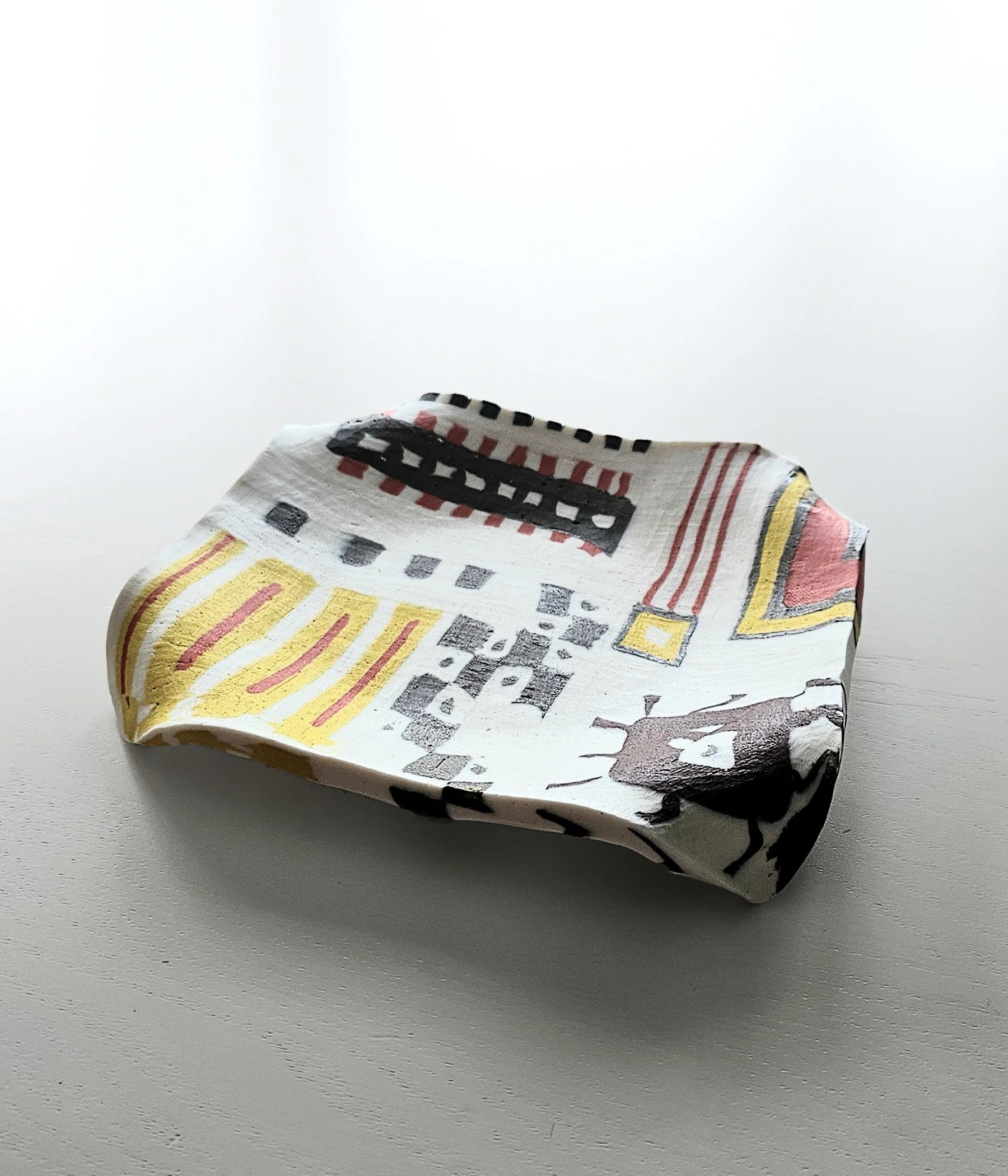
Andean Mantle reimagines the memory of ancient woven cloths through clay. Built with layers of nerikomi, the piece echoes geometric patterns carried across pre-Hispanic civilizations long before the Inca, and transformed through time. Like a textile shaped from earth, its surface holds fragments of a language that still feels mysterious and unfinished.
2025
Porcelain
7.5 x 7.5 × 1 in.
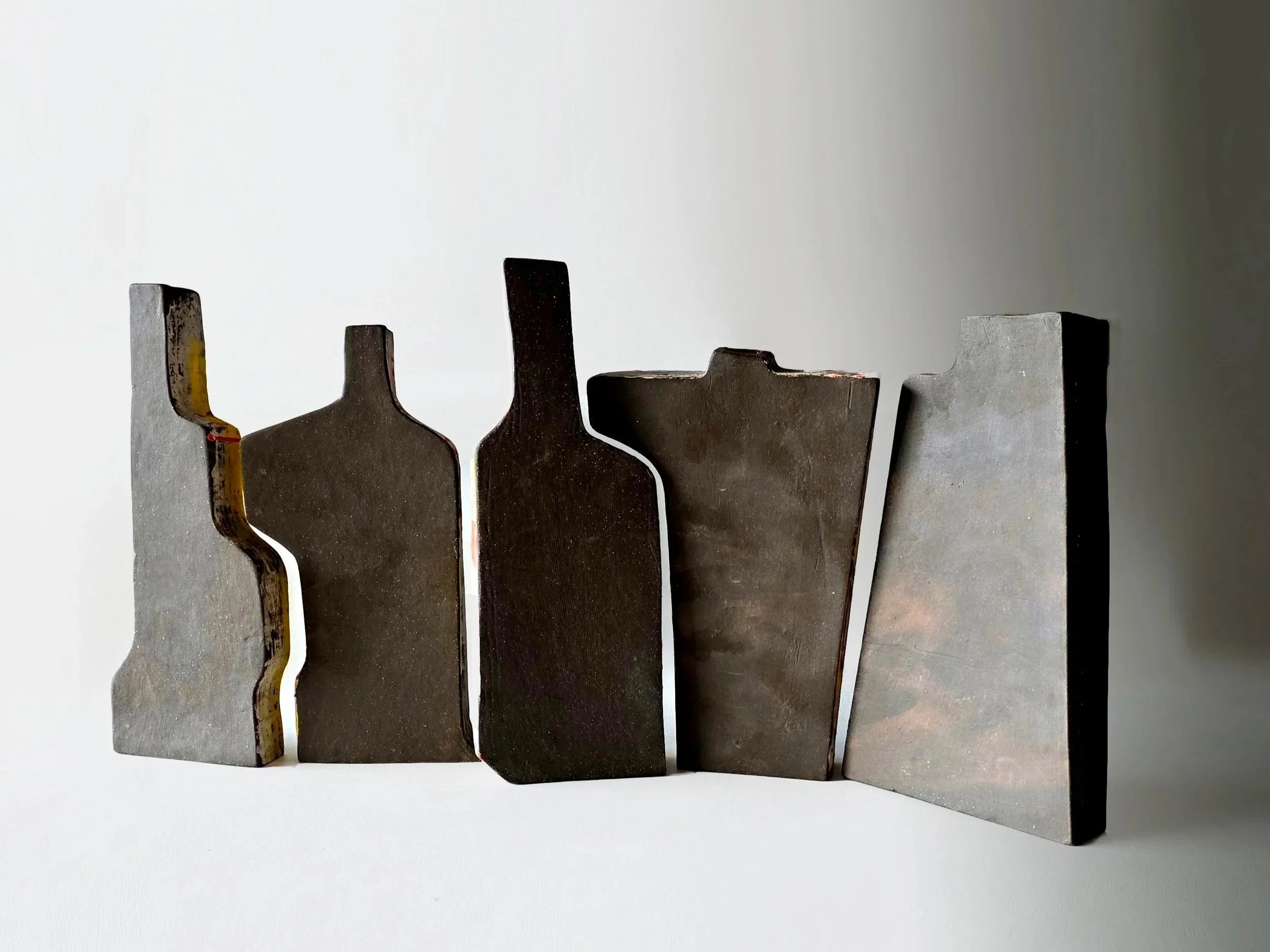
A set of five bud vases inspired by the precision and rhythm of Inca polygonal masonry. Each piece is designed to connect with the next, forming a sculptural wall of interlocking angles and shifting surfaces. Together, they echo the harmony and balance found in ancient stonework, while still functioning as individual vessels. Made in dark stoneware with colorful monoprint details that contrast with the geometric forms and emphasize the play of light across the surfaces.
2026
Stoneware
18×1x10 in.
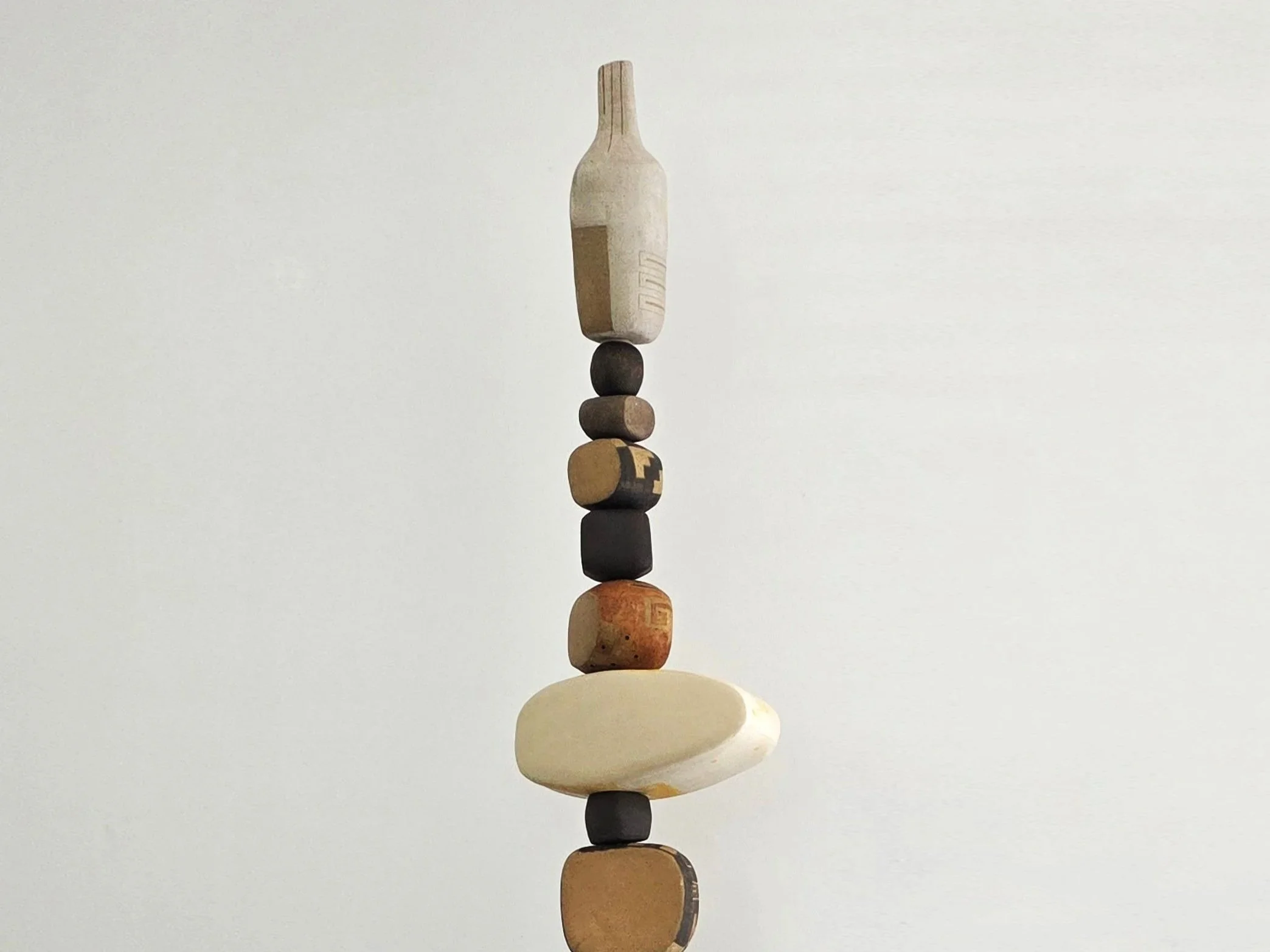
This piece takes the form of a totem, a vertical structure traditionally used to hold family lineage, memory, and protective symbols. Reimagined in a contemporary context, it reflects a life shaped by change, passage, and distinct stages of becoming.
From bottom to top, the work unfolds through layered fragments created with different clays and surface techniques, each marking a stage of transformation. Rather than a fixed narrative, the totem becomes a record of cultural memory, migration, and identity as something continuously reassembled.
2026
Mixed clay bodies, steel, wood
20×20×72 in.
2026
Mixed clay bodies, steel, wood
20×20×72 in.
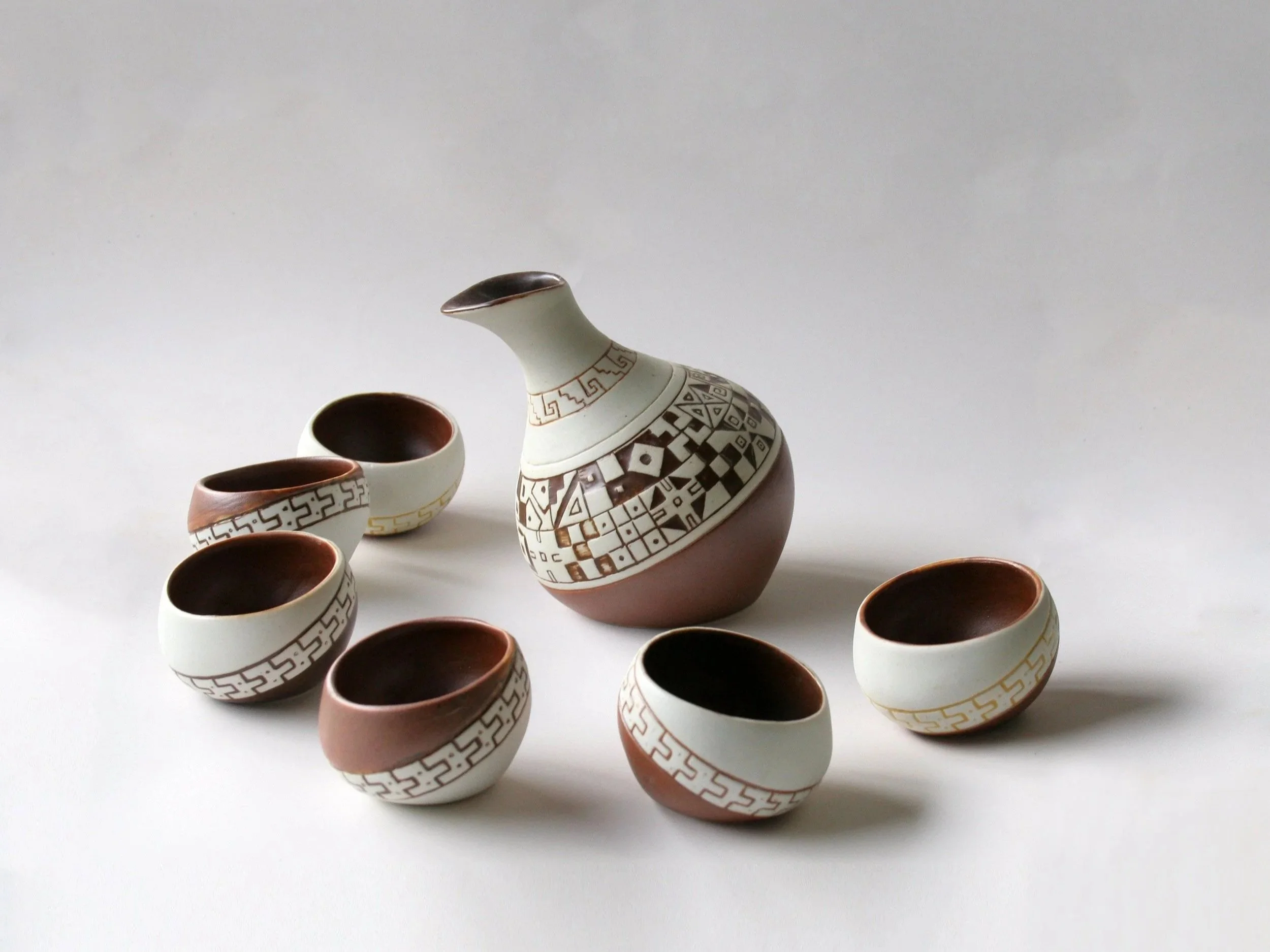
Liquor set inspired by pre-Columbian culture, featuring a centerpiece that pays homage to the Incan aribalo. The geometric patterns adorning the pieces are meticulously carved using the traditional sgraffito technique. This set is truly crafted for special occasions.
2024
Porcelain
8×10×7 in.
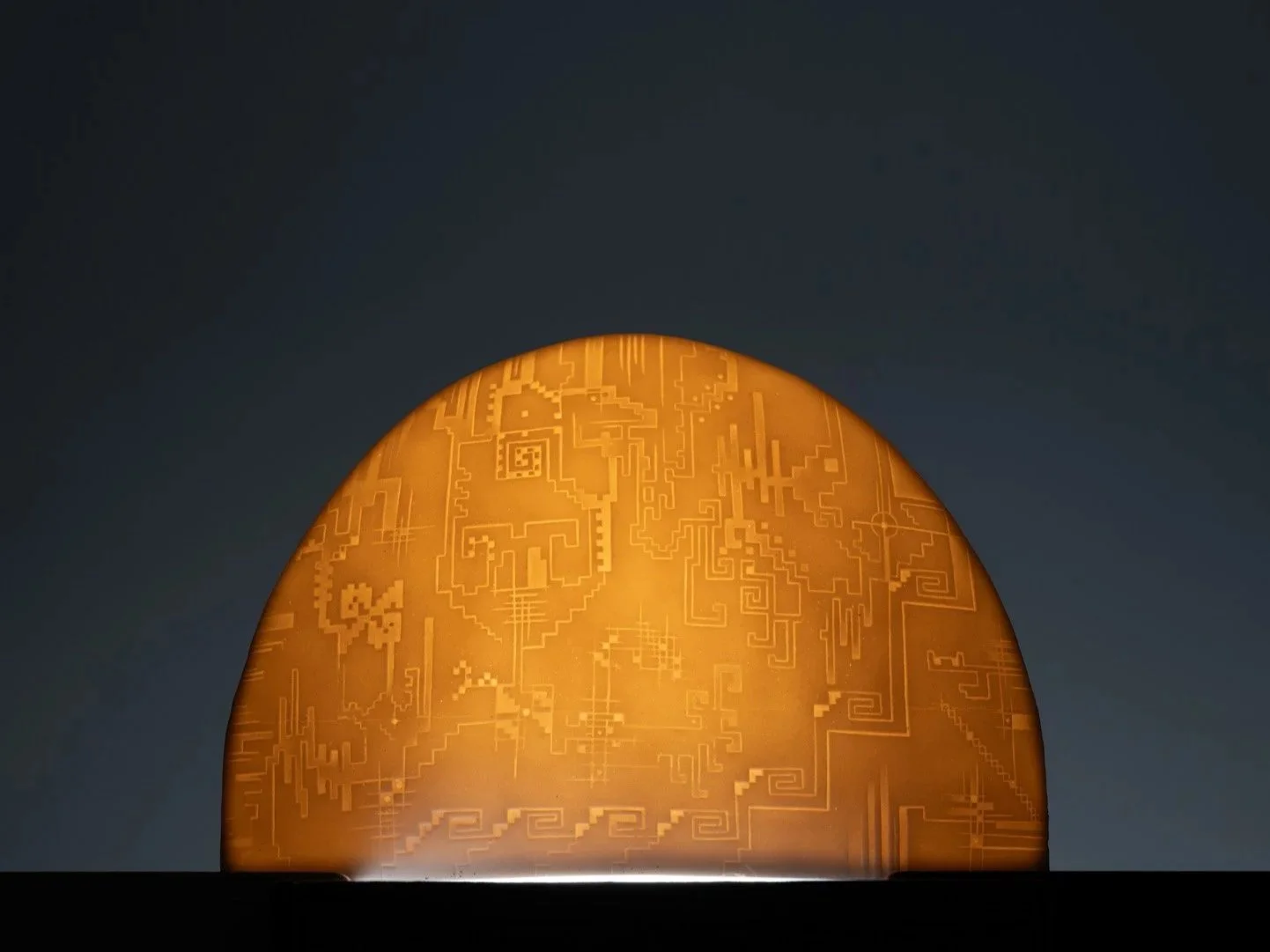
Killa is a slip-cast porcelain lamp inspired by pre-Columbian visual languages. Its delicate engraved patterns are carved into translucent porcelain, revealing their full beauty as light passes through them. The development of the original model and plaster mold was a slow, meticulous process, making each piece the result of both technical precision and artistic exploration.
2024
Porcelain
12×3×38 in.
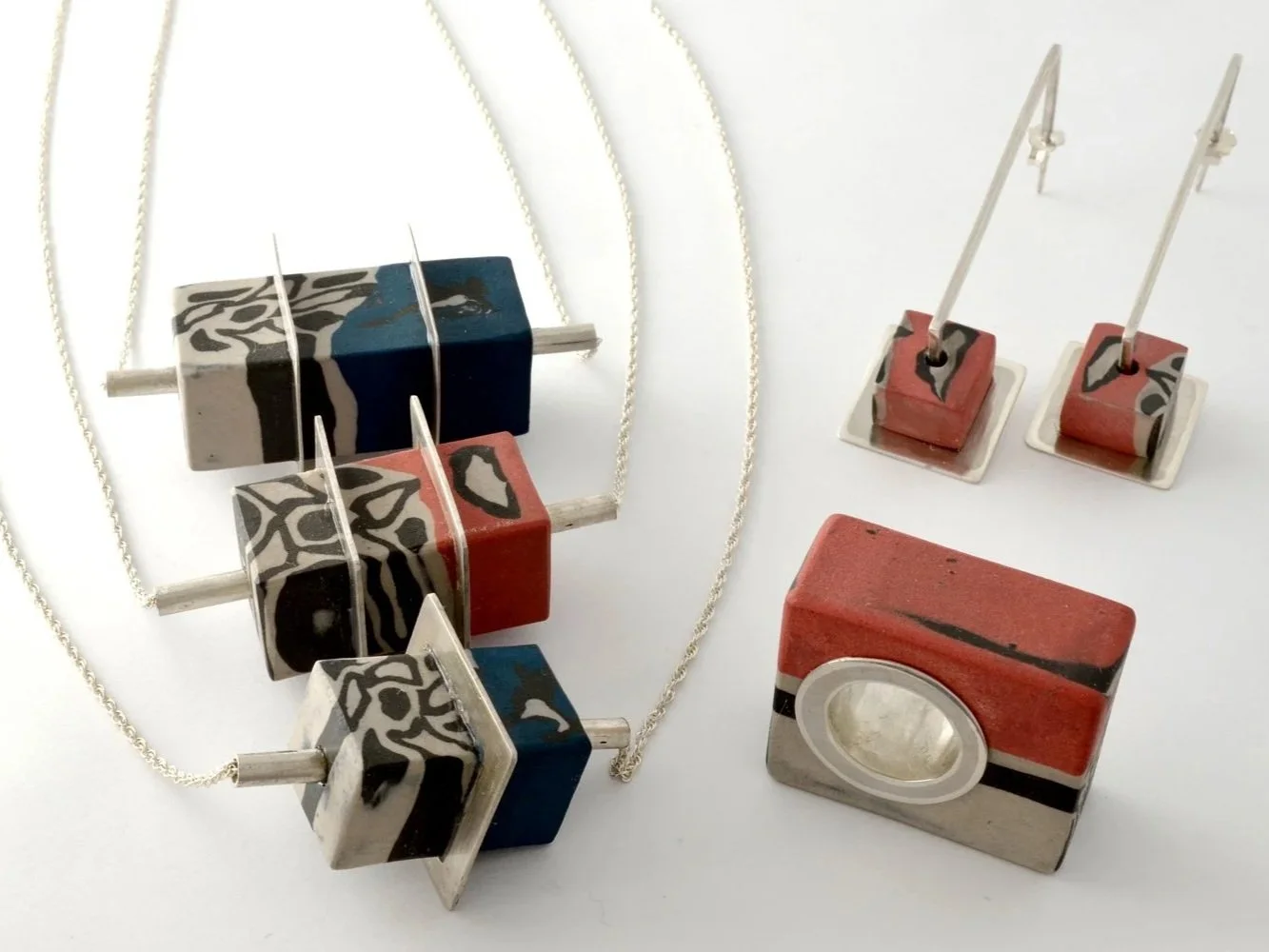
Created in Peru, Mullanqui is one of my earliest explorations of nerikomi, a Japanese ceramic technique that creates intricate patterns by layering colored clays. Combining stoneware with sterling silver, this jewelry series reflects my early interest in translating ceramic processes into wearable art. The work received First Prize in a national craft competition in Peru, marking an important milestone in my artistic journey. It was later featured in Arkinka, a Peruvian magazine specializing in architecture and design.
2012
Stoneware
8×7×1 in.
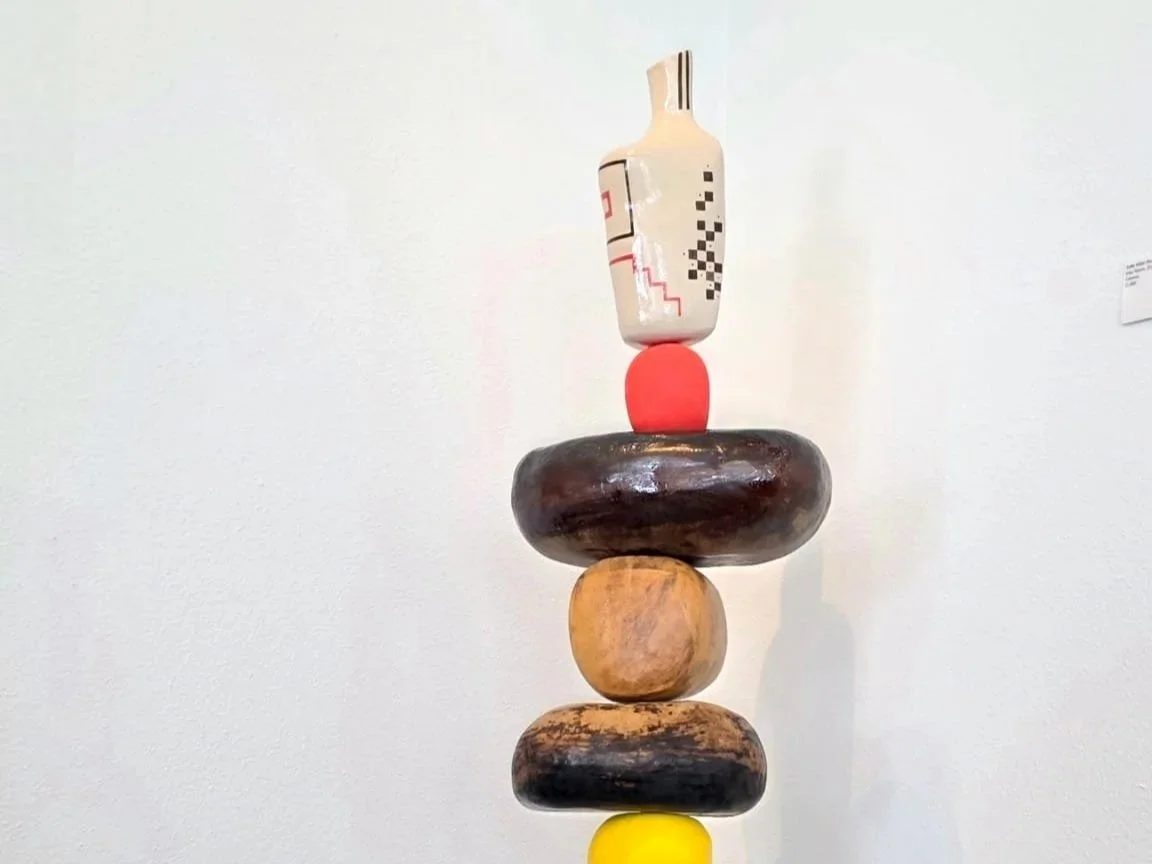
Inka Totem draws from the visual language of the Andes through bold color, rhythmic pattern, and stacked form. Rich earthen tones are interrupted by vivid yellow and red, creating moments of contrast and energy. Patterns carved into the upper and lower sections frame the piece like markers of continuity, connecting ancestral references with a contemporary ceramic language.
2025
Stoneware, metal and wood
20×20×60 in.
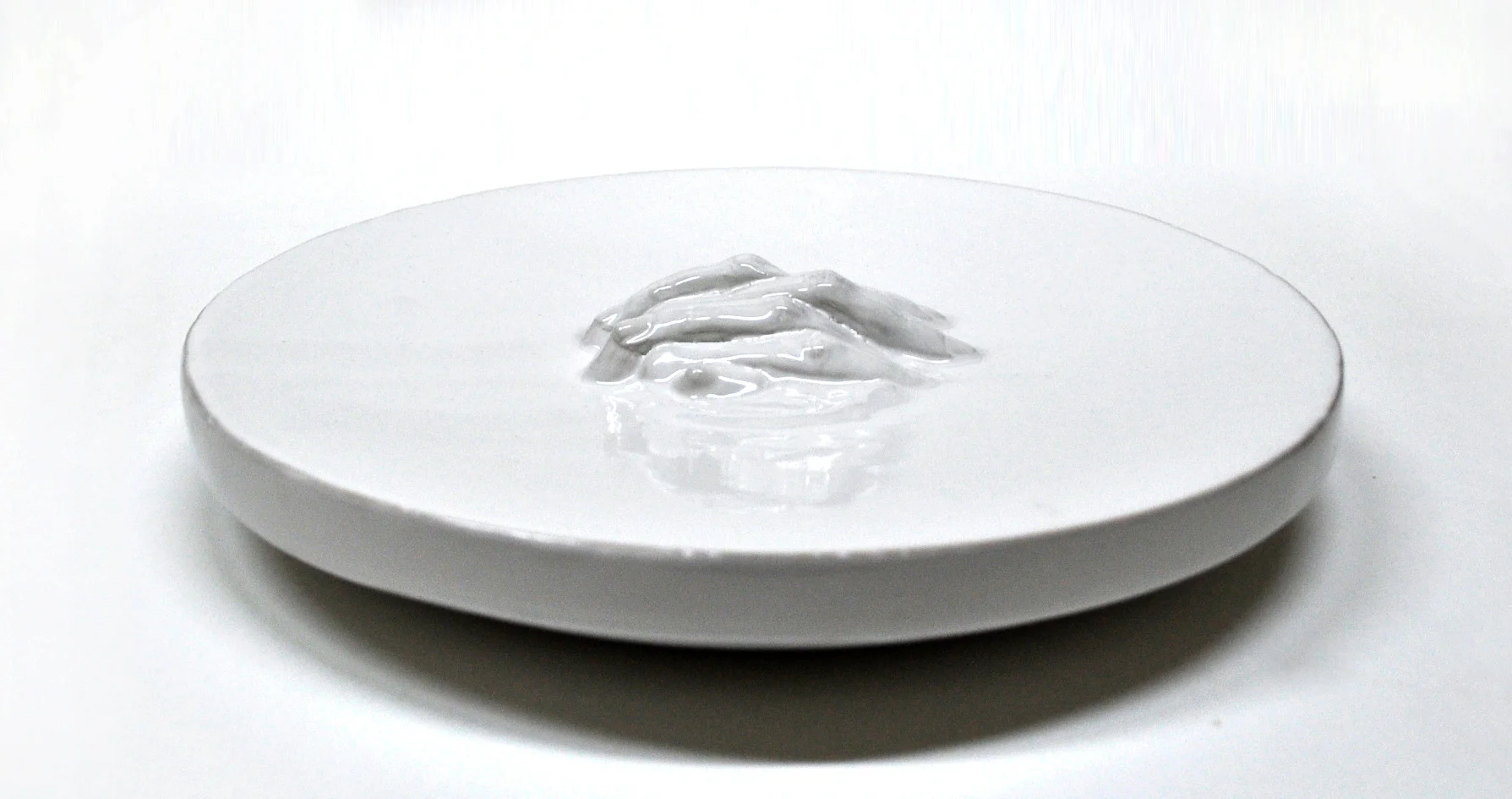
Tezukuri, meaning "made by hand" in Japanese, is a series that began in 2013 as an exploration of the intimate relationship between the body and the ceramic vessel.
During my years in Japan, I became fascinated by the way functional pottery carries the presence of its maker and creates a quiet dialogue with the hands that hold it. This appreciation for touch became the starting point of the series.
The first pieces were created by impressing fingerprints into clay, preserving these unique marks through molds and slip-cast porcelain. As the project evolved, the investigation expanded to include cast hands, fingers, and feet, transforming fragments of the body into functional ceramic objects. Plates, cups, and planters became vessels that preserve traces of human presence while remaining part of everyday rituals.
Several pieces from Tezukuri were created for the tasting menu at Astrid y Gastón, where they became part of the dining experience. Two works from the series were also featured in Eden.pe: Revelaciones para el Mundo (2013), a publication celebrating Peruvian gastronomy through the work of leading chefs, artists, and designers.
Through these works, Tezukuri reflects on the connection between people and the objects they use, revealing how ceramics can preserve the memory of touch in everyday life.
2012-2022
Earthenware and stoneware
Variable dimensions